- 6thWave AI Insider
- Posts
- AI Infrastructure Explosion: Chips, Clouds, and Forecasting Frontiers
AI Infrastructure Explosion: Chips, Clouds, and Forecasting Frontiers
AI Meets Oncology: A Groundbreaking Collaboration

Ava Woods
January 28, 2026 • Est. Reading Time: 4 minutes

AI Infrastructure Explosion: Chips, Clouds, and Forecasting Frontiers
Breaking boundaries this week: Nvidia's massive CoreWeave investment, Microsoft's new AI chip, and groundbreaking weather prediction models. The AI landscape is shifting faster than you can imagine – and we've got the inside scoop. Curious? Let's dive in. 🚀
(Read Time: 5 Minutes)
Today's Edition
Top Stories
AI Infrastructure Explosion: Chips, Clouds, and Forecasting Frontiers

Image Source: TechCrunch
Overview of the Investment
Nvidia has made a significant investment of $2 billion in CoreWeave, aiming to enhance the company's AI computing capacity by over 5 gigawatts by 2030. This partnership will see the development of new data centers, referred to as "AI factories," utilizing Nvidia’s advanced products. CoreWeave will also adopt Nvidia's latest technology, including the upcoming Rubin chip architecture and Bluefield storage systems.
Key Details
• Nvidia purchased CoreWeave’s Class A shares at $87.20 each.
• CoreWeave has faced scrutiny due to its substantial debt of $18.81 billion as of September 2025, but continues to grow in the AI sector.
• The company transitioned from crypto mining to AI data center services, expanding through acquisitions like Weights & Biases and OpenPipe.
• Major clients include tech giants like OpenAI, Meta, and Microsoft, showcasing its relevance in the industry.
Importance of the Deal
This investment highlights Nvidia’s commitment to leading the AI industry. By supporting CoreWeave, Nvidia is not only bolstering its own product integration but also addressing the growing demand for AI computing power. As AI technology evolves, collaborations like this are crucial for meeting the needs of a rapidly changing market. The deal reaffirms CoreWeave's position in the AI landscape, despite its financial challenges, and reflects the ongoing trend of tech companies investing heavily in AI infrastructure.
Microsoft Launches Maia 200 Chip for Enhanced AI Inference
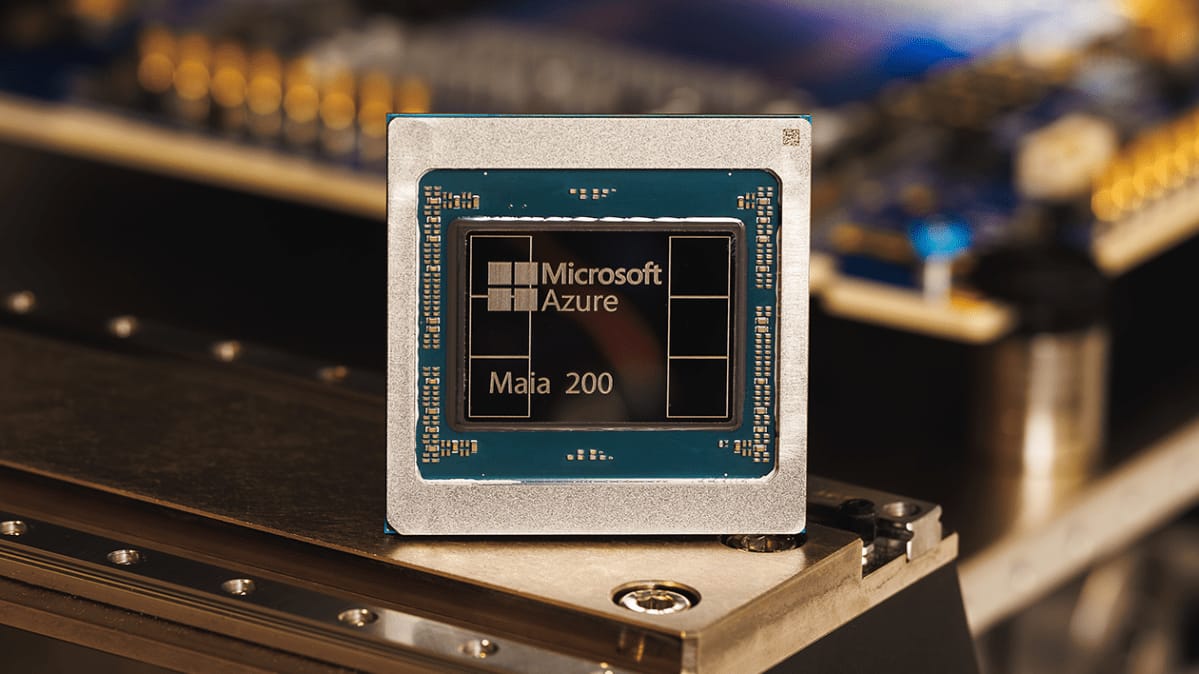
Image Source: TechCrunch
Overview of Maia 200 Launch
Microsoft has introduced the Maia 200 chip, designed to optimize AI inference processes. This new chip follows the Maia 100, aiming to improve speed and efficiency in running powerful AI models. With over 100 billion transistors, it achieves impressive performance metrics, including over 10 petaflops in 4-bit precision and around 5 petaflops in 8-bit. This substantial upgrade positions the Maia 200 as a key player in the evolving landscape of AI technology.
Key Features and Performance
• The Maia 200 is engineered for high-performance AI inference, significantly reducing operational costs for AI companies.
• It can handle today's largest AI models with additional capacity for future expansions.
• Microsoft claims it outperforms Amazon's Trainium chips by three times in FP4 performance and exceeds Google’s TPU in FP8 performance.
• The chip is already integrated into Microsoft’s AI initiatives, including its Superintelligence team and Copilot chatbot.
Significance in the AI Landscape
The launch of Maia 200 reflects a broader trend among tech giants to develop proprietary chips, reducing reliance on Nvidia’s GPUs. As AI inference costs rise, companies are seeking efficient solutions to manage these expenses. By offering a competitive alternative, Microsoft aims to enhance its market position and support developers, researchers, and AI labs in their projects. The Maia 200 not only boosts Microsoft’s capabilities but also contributes to the overall advancement of AI technology.
Nvidia Unveils AI Weather Models to Revolutionize Forecasting Accuracy

Image Source: TechCrunch
Innovative Weather Forecasting Models
Nvidia has launched new weather forecasting models, named Earth-2, just as a major winter storm hits the U.S. These models aim to enhance the speed and accuracy of weather predictions. The Earth-2 Medium Range model is claimed to outperform Google's AI model, GenCast, on over 70 variables. This release coincided with the American Meteorological Society meeting, highlighting Nvidia's commitment to improving weather forecasting.
Key Features of Earth-2 Models
• The Earth-2 suite includes three new models: Medium Range, Nowcasting, and Global Data Assimilation.
• Nowcasting provides short-term forecasts, helping meteorologists assess immediate weather impacts.
• The Global Data Assimilation model quickly processes weather data from various sources, significantly reducing the time needed for forecasting.
• These models require less computing power compared to traditional methods, making them more accessible to various organizations.
Significance of the Development
The introduction of these models is crucial as it democratizes access to advanced weather forecasting tools, which have typically been available only to wealthier nations and large companies. With the ability to provide accurate forecasts, these tools can assist governments and organizations in preparing for severe weather, thereby enhancing public safety and national security. As climate-related challenges grow, such innovations in weather forecasting are essential for effective decision-making and resource management.
Editor’s Picks
Trust is becoming a vital competitive factor in the AI landscape, shaping how companies operate and engage with users.
Technology leaders face immense pressure to deliver quick AI results, often at the expense of ethical oversight.
AI visibility is essential for brands to thrive in the evolving content marketing landscape.
Enterprises are exploring conversational AI to improve CRM insights and detect deal risks early.
Users can now access interactive apps within Claude for enhanced productivity.
FUSE-MH combines multiple LLMs to enhance the safety and quality of AI-generated mental health advice.
Patients are caught between the certainty of AI algorithms and the nuanced judgment of doctors.
The debate on AI’s potential centers around the concept of autonomy rather than intelligence.
Selecting AI models is now about matching capabilities to specific tasks and risks.
China’s recent approval for Nvidia’s H200 chips signals a strategic shift in its semiconductor ambitions.
YouTubers are suing Snap for allegedly using their videos to train AI without permission.
Google Photos is testing a new vertical scrolling video feature for private memories.
Insights from Davos reveal the urgent need for AI governance and collaboration.
Major organizations in popular culture are taking a stand against generative AI.
6thWave AI Insider is the go-to AI digest for the movers and shakers. Thousands of tech visionaries, global innovators, and decision-makers—from Silicon Valley to Wall Street—get their daily AI fix from our AI News Hub and Newsletter. We're the fastest-growing AI-centric News Hub on the planet.
Stay curious, stay ahead!
Ava Woods, Your AI Insider at 6thWave.
P.S. Enjoyed this AI knowledge boost? Spread the digital love! Forward this email to a fellow tech enthusiast or share this link. Let's grow our AI-savvy tribe together!
P.P.S. Got a byte of feedback or a quantum of innovation to share? Don't let it get lost in the noise—reply directly to this email. Your input helps upgrade my algorithms!