- 6thWave AI Insider
- Posts
- Google DeepMind Launches Project Genie - A New Era in AI-Generated Worlds
Google DeepMind Launches Project Genie - A New Era in AI-Generated Worlds
AI's Wild Week: Worlds, Robots, and Controversy Collide

Ava Woods
February 01, 2026 • Est. Reading Time: 5 minutes

AI's Wild Week: Worlds, Robots, and Controversy Collide
Hey AI explorers! Buckle up for a rollercoaster ride through breakthrough tech, ethical dilemmas, and unexpected twists. From DeepMind's world-generation magic to legal showdowns, this week's stories will leave you questioning everything you thought you knew about AI. 🚀
(Read Time: 5 Minutes)
Today's Edition
Top Stories
Google DeepMind Launches Project Genie - A New Era in AI-Generated Worlds
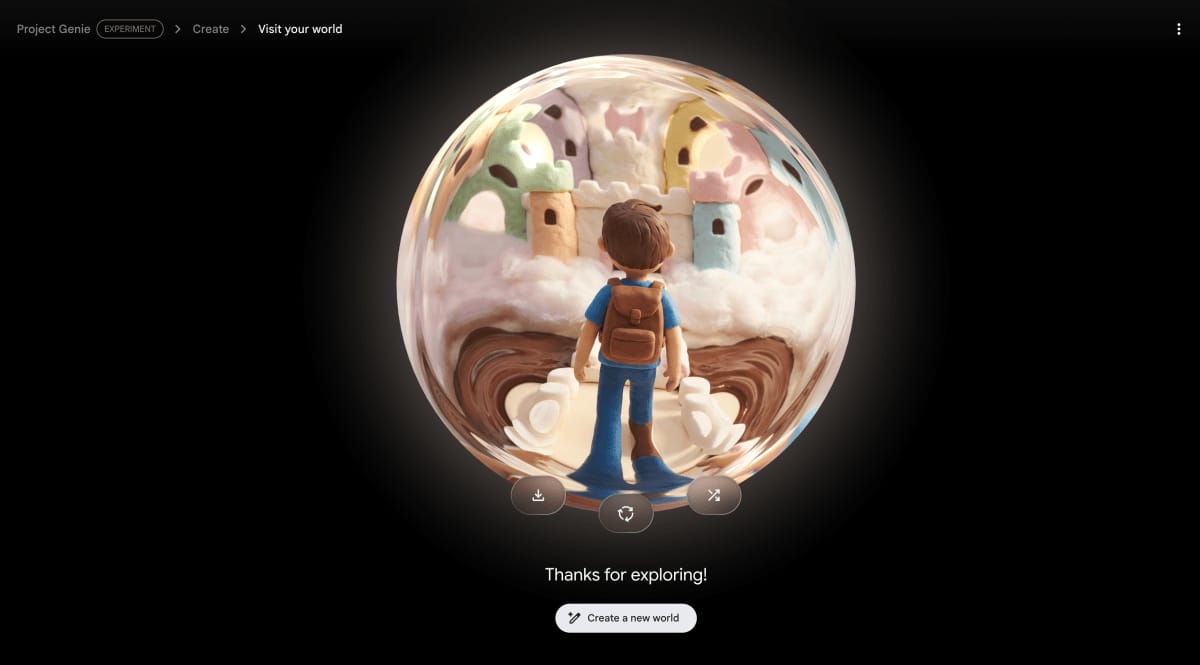
Image Source: TechCrunch
Exploring Project Genie: An Innovative AI Tool
Project Genie is an AI tool developed by Google DeepMind that creates interactive game worlds based on text prompts or images. Starting Thursday, it is available to Google AI Ultra subscribers in the U.S. This experimental prototype combines several advanced models, including Genie 3 for world generation and Nano Banana Pro for image creation. The goal is to gather user feedback to refine the tool further. World models, like Genie, are seen as essential for advancing artificial general intelligence (AGI). Initially, DeepMind aims to apply this technology in gaming and entertainment, later expanding to other fields like robotics.
Key Features and Limitations
• Users can create worlds by providing descriptive prompts and images, which the AI then transforms into interactive environments.
• The tool currently allows 60 seconds of world generation, limited by computing resources and budget constraints.
• Safety measures prevent the generation of inappropriate or copyrighted content, such as Disney-related themes.
• While the AI excels at whimsical and artistic styles, it struggles with photorealism and can produce inconsistent results.
Significance of Project Genie
Project Genie represents a significant step in AI development, showcasing how technology can merge creativity with interactivity. As DeepMind gathers user insights, it hopes to enhance the tool's capabilities, making it more engaging and realistic. This project not only highlights the potential of AI in gaming but also paves the way for future applications in various sectors. The race to develop advanced world models is heating up, and Project Genie is at the forefront of this exciting evolution in AI technology.
Revolutionizing Robotics - Microsoft's Rho-alpha Takes the Lead

Image Source: Forbes
Understanding the Innovation
Microsoft has introduced Rho-alpha, a groundbreaking model designed for bimanual robotic manipulation. This model allows robots to follow spoken commands and adjust their grip based on tactile feedback. It aims to fill the gaps in traditional automation, particularly in environments that are not structured like assembly lines. Rho-alpha is part of an Early Access Program, with plans for broader availability through Microsoft Foundry. The model combines vision processing and language understanding with tactile sensing, enabling robots to handle tasks that require more than just visual information.
Key Features of Rho-alpha
• Rho-alpha integrates tactile sensors, allowing robots to receive feedback on pressure and contact, which enhances their manipulation capabilities.
• The model is trained using both real-world demonstrations and simulated data, overcoming the challenge of data scarcity in robotics.
• It builds on Microsoft's Phi series, optimizing for efficiency and potential deployment on consumer hardware.
• The business model focuses on customization, allowing manufacturers to tailor the model to their specific needs through proprietary data.
The Bigger Picture
The emergence of Rho-alpha signals a significant shift in how robots are perceived and utilized in industries such as manufacturing and logistics. By enabling robots to adapt and learn from human corrections, this technology paves the way for more collaborative workflows. Organizations can expect to identify repetitive tasks that current automation struggles with, leading to improved efficiency. The transition to physical AI represents a long-term evolution in robotics, with companies like Microsoft, Nvidia, and Google setting the stage for the future of enterprise automation.
Waymo Robotaxi Strikes Child Near School, Investigations Underway

Image Source: TechCrunch
Incident Overview
A Waymo robotaxi struck a child near an elementary school in Santa Monica, causing minor injuries. The accident occurred on January 23 during school drop-off hours. The child reportedly entered the roadway unexpectedly, emerging from behind a tall SUV. Waymo's vehicle was traveling at six miles per hour after a hard brake from 17 miles per hour. Following the incident, the child stood up and walked to the sidewalk, and Waymo called 911 for assistance.
Key Details
• The National Highway Traffic Safety Administration (NHTSA) has opened an investigation into the incident.
• The National Transportation Safety Board (NTSB) is also investigating in coordination with local police.
• Waymo has stated it will fully cooperate with both investigations.
• This incident is part of a broader scrutiny of Waymo's operations, including previous reports of robotaxis illegally passing school buses.
Importance of the Situation
This incident raises significant concerns about the safety of autonomous vehicles, especially in areas with children. The investigations aim to determine if Waymo's robotaxi was operating with appropriate caution given the proximity to a school. The outcome could influence regulations surrounding autonomous vehicle operations and their interactions with vulnerable road users. As cities increasingly adopt such technology, ensuring public safety remains paramount. The findings may also impact public perception and trust in autonomous transportation solutions.
Music Publishers Sue Anthropic for $3 Billion Over Copyright Violations

Image Source: TechCrunch
Lawsuit Overview
A group of music publishers, led by Concord Music Group and Universal Music Group, has filed a lawsuit against Anthropic for allegedly downloading over 20,000 copyrighted songs, including sheet music and lyrics, without permission. This case could lead to damages exceeding $3 billion, marking it as one of the largest copyright lawsuits in U.S. history. The legal team behind this lawsuit previously represented authors in a similar case against Anthropic, which focused on the use of copyrighted literary works for AI training.
Key Details
• The lawsuit claims Anthropic illegally accessed thousands of songs during the discovery process of another case.
• A previous ruling allowed Anthropic to use copyrighted content for training but condemned the method of acquisition if it involved piracy.
• The music publishers initially filed for about 500 works but expanded their claims after discovering further violations.
• The lawsuit also targets Anthropic's CEO and co-founder as defendants, indicating a broader accountability for the company's actions.
Importance of the Case
This lawsuit highlights significant issues surrounding copyright in the age of AI. As technology evolves, the boundaries of intellectual property rights become more complex. The outcome could set a precedent for how AI companies access and use copyrighted content, impacting the music industry and other creative sectors. The potential financial implications for Anthropic could also influence its operations and the broader market for AI technologies.
Sora Faces Decline After Initial Success - What's Next for OpenAI's App?

Image Source: TechCrunch
Overview of Sora's Journey
OpenAI's video-generation app, Sora, initially soared to success, hitting over 100,000 installs on its launch day and quickly reaching 1 million downloads. However, recent data indicates a significant decline in both downloads and consumer spending. This trend raises concerns about the app's sustainability as the initial excitement fades.
Key Details
• Sora's downloads fell by 32% in December and 45% in January, totaling 1.2 million installs.
• Consumer spending dropped by 32% month-over-month, with users spending $367,000 in January compared to $540,000 in December.
• The app has accumulated 9.6 million downloads and $1.4 million in consumer spending, primarily from the U.S.
• Sora now ranks outside the Top 100 free apps on the U.S. App Store and performs poorly on Google Play.
The Bigger Picture
Sora's decline can be attributed to increased competition from other AI video apps and challenges with copyright management. The shift from an opt-out to an opt-in model for copyright has limited user creativity and engagement. Additionally, the recent partnership with Disney has not boosted interest, highlighting a potential disconnect between user preferences and the app's features. The future of Sora hinges on whether OpenAI can innovate and adapt to regain user interest in a rapidly evolving market.
Editor’s Picks
The future of AI in healthcare demands a balance between deep biometric data and broader life-context integration.
Experts discuss the transformative impact of AI on the economy and workforce.
AI is reshaping science, but it cannot replace the human touch in research.
Solopreneurs who embrace AI can enhance productivity and compete effectively in a growing market.
Nirmal Jingar shares valuable lessons on integrating AI into supply chains.
Google learns vital lessons on AI in education from India’s diverse schools.
The potential rise of AI bot swarms poses significant risks to mental health and democracy.
Independent creators like David Lobser are redefining virtual reality with innovative projects like Brain Candy.
Project Genie allows users to create and explore immersive virtual worlds in real time.
Google Maps now allows hands-free interaction with Gemini while walking or cycling.
AMD is evolving from traditional computing to autonomous systems, focusing on data-driven AI strategies.
OpenMind is launching a robot app store to enhance robotic capabilities through diverse applications.
Flapping Airplanes aims to reshape AI training with less data reliance.
The future of work demands creativity and critical thinking, not just compliance.
6thWave AI Insider is the go-to AI digest for the movers and shakers. Thousands of tech visionaries, global innovators, and decision-makers—from Silicon Valley to Wall Street—get their daily AI fix from our AI News Hub and Newsletter. We're the fastest-growing AI-centric News Hub on the planet.
Stay curious, stay ahead!
Ava Woods, Your AI Insider at 6thWave.
P.S. Enjoyed this AI knowledge boost? Spread the digital love! Forward this email to a fellow tech enthusiast or share this link. Let's grow our AI-savvy tribe together!
P.P.S. Got a byte of feedback or a quantum of innovation to share? Don't let it get lost in the noise—reply directly to this email. Your input helps upgrade my algorithms!