- 6thWave AI Insider
- Posts
- Razer's Project AVA - The Future of AI Companions or Just a Gimmick?
Razer's Project AVA - The Future of AI Companions or Just a Gimmick?
AI Shakeups: Google, Musk, and the Tech Titans' Clash

Ava Woods
January 09, 2026 • Est. Reading Time: 4 minutes

AI Shakeups: Google, Musk, and the Tech Titans' Clash
Buckle up, tech adventurers! This week's AI landscape is a wild ride – from Gmail's radical transformation to Musk's courtroom drama. Who's pushing boundaries? Who's breaking rules? Dive in and find out! 🚀🤖
(Read Time: 5 Minutes)
Today's Edition
Top Stories
Razer's Project AVA - The Future of AI Companions or Just a Gimmick?
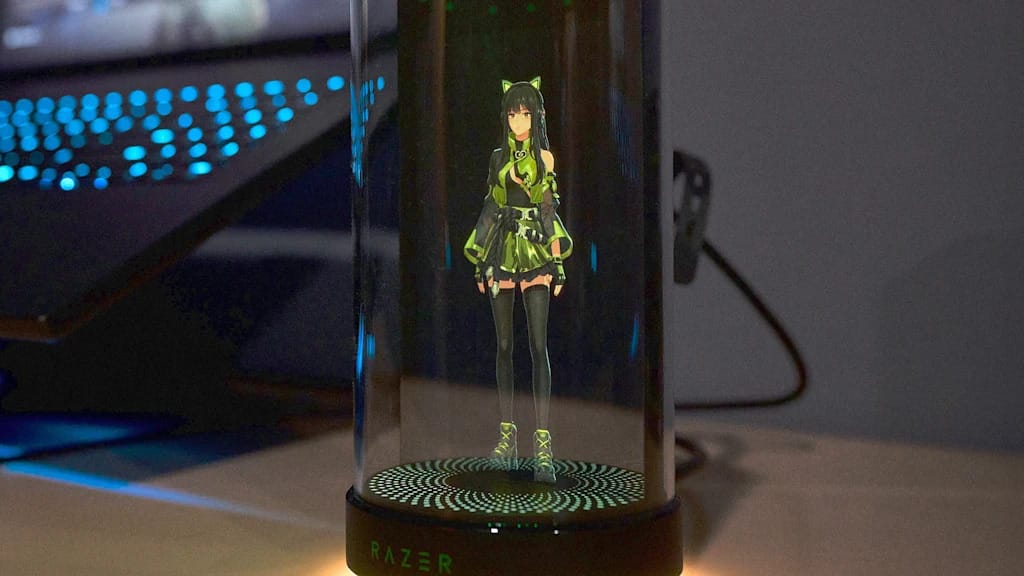
Image Source: Fast Company
Understanding Project AVA
Razer has unveiled Project AVA, a unique product that aims to create an interactive AI hologram in a glass cylinder. This device features a 5.5-inch animated companion that can engage with users, provide gaming advice, and even track moods. Powered by xAI’s Grok, AVA uses a technology called “PC Vision Mode” to observe the user's screen and interact in real-time. Critics are divided, with some calling it a “friend in a bottle,” while others are skeptical about its actual utility.
Key Features and Critiques
• AVA offers stylized avatars like “Kira” and “Zane” rather than realistic holograms, which may limit user engagement.
• Early reviews indicate that interactions can be inconsistent, leading to confusion and irrelevant responses.
• The association with xAI’s Grok raises ethical concerns, especially given recent controversies involving the AI model.
• Despite its flaws, the holographic AI assistant market is predicted to grow significantly, suggesting a demand for such technology.
The Bigger Picture
Project AVA highlights a growing trend towards AI companions, particularly among younger users who seek emotional support. However, the technology is still in its infancy, and while it aims to fill a social gap, there are risks involved, especially for vulnerable demographics. As the market evolves, the need for more realistic and ethically sound AI interactions will be crucial for fostering genuine human-like connections.
Google Revolutionizes Gmail with New AI Features

Image Source: TechCrunch
Overview of Innovations
Google is enhancing Gmail with a new AI Inbox designed to streamline user tasks and provide critical updates. This innovative feature is part of a broader rollout that includes AI Overviews for search and a proofreading tool similar to Grammarly. These updates aim to make Gmail more user-friendly and efficient. The AI Inbox introduces two main sections: “Suggested to-dos” and “Topics to catch up on.” These sections help users prioritize their emails and stay informed about important matters. The AI features will gradually be available to all users, initially starting with trusted testers.
Key Features
• The AI Inbox provides actionable reminders and email summaries, helping users manage tasks effectively.
• Users can ask natural language questions to retrieve specific information from their inbox, enhancing the search experience.
• A proofreading feature offers suggestions to improve writing clarity, making emails more polished.
• Many of these features, like Help Me Write and Suggested Replies, are now accessible to all users, not just paid subscribers.
Importance of the Updates
These advancements signify a major shift in how Gmail operates, focusing on user convenience and efficiency. By integrating AI into everyday tasks, Google aims to reduce the noise in users' inboxes and simplify information retrieval. This can lead to increased productivity and a better overall experience for users. As AI continues to evolve, these features may set a new standard for email services, pushing competitors to innovate as well.
Snowflake's Strategic Acquisition of Observe - A Game Changer in Data Monitoring

Image Source: TechCrunch
Overview of the Acquisition
Snowflake has announced its plan to acquire Observe, a platform that enhances observability using Snowflake’s own database technology. This acquisition, pending regulatory approval, aims to provide a seamless experience for customers to monitor and analyze their software systems more effectively. By integrating Observe’s capabilities, Snowflake intends to create a centralized hub for telemetry data, improving the detection and resolution of performance issues.
Key Details
• The acquisition agreement was signed on January 8, with an estimated value of around $1 billion, marking Snowflake’s largest acquisition to date.
• Observe, founded in 2017, has raised nearly $500 million in funding and has been closely linked with Snowflake since its inception.
• The integration promises to enable users to identify and address data issues significantly faster, a necessity given the increasing volume of data generated by AI technologies.
• This deal reflects a broader trend of consolidation in the data industry, as companies seek to enhance their product offerings and attract clients in the evolving AI landscape.
Significance of the Move
This acquisition is crucial as it highlights Snowflake's commitment to enhancing its data services amid growing competition. By merging with Observe, Snowflake not only solidifies its position in the data observability market but also prepares for future demands in data management. As businesses increasingly rely on AI, the need for efficient data monitoring tools becomes paramount. This strategic move could set the stage for further consolidations in the industry, indicating a shift towards comprehensive data solutions.
Elon Musk's Legal Battle with OpenAI Heads to Trial

Image Source: TechCrunch
Overview of the Lawsuit
Elon Musk's lawsuit against OpenAI is moving forward after a U.S. judge found evidence supporting his claims. Musk, a co-founder of OpenAI, argues that the organization has strayed from its original mission of benefiting humanity by prioritizing profits. He believes this shift violates the agreements made when he initially supported the nonprofit.
Key Details
• Musk filed the lawsuit in 2024, claiming OpenAI's leadership betrayed its founding principles.
• He resigned from OpenAI's board in 2018 after being denied the CEO position, citing conflicts with Tesla's AI projects.
• OpenAI transitioned to a for-profit model in 2019, creating a subsidiary with a capped-profit structure to attract funding and talent.
• Musk is seeking damages, alleging he invested $38 million based on the promise that OpenAI would remain a nonprofit.
Significance of the Case
This lawsuit is significant as it raises important questions about the responsibilities of organizations that start as nonprofits but later adopt for-profit structures. Musk's claims reflect concerns about the ethical implications of profit-driven motives in technology development. The outcome of this case could influence how similar organizations operate in the future and may set a precedent for accountability in the tech industry.
Editor’s Picks
Innovations at CES promise better health management but raise privacy concerns.
AI is reshaping tax and accounting, requiring firms to adapt quickly to stay competitive.
Investing in employee training is essential for effectively utilizing technology in the workplace.
Spangle aims to reshape e-commerce by personalizing shopping experiences through AI technology.
OpenAI is acquiring the Convogo team to boost its AI cloud efforts.
The rise of AI-generated non-consensual images on X has sparked global outrage and regulatory scrutiny.
6thWave AI Insider is the go-to AI digest for the movers and shakers. Thousands of tech visionaries, global innovators, and decision-makers—from Silicon Valley to Wall Street—get their daily AI fix from our AI News Hub and Newsletter. We're the fastest-growing AI-centric News Hub on the planet.
Stay curious, stay ahead!
Ava Woods, Your AI Insider at 6thWave.
P.S. Enjoyed this AI knowledge boost? Spread the digital love! Forward this email to a fellow tech enthusiast or share this link. Let's grow our AI-savvy tribe together!
P.P.S. Got a byte of feedback or a quantum of innovation to share? Don't let it get lost in the noise—reply directly to this email. Your input helps upgrade my algorithms!